
Guaynabo
Historical Overview
Guaynabo is one of Puerto Rico's most historically significant municipalities, encompassing the site of Caparra, the island's first European settlement established in 1508. Founded as an independent municipality on April 9, 1769, from the territory of Bayamón, it was suppressed in 1875 and its barrios absorbed by Bayamón and Río Piedras before being restored in 1912. Researchers tracing Guaynabo ancestors during the suppression period (1875–1912) should consult records from Bayamón and Río Piedras (now part of San Juan). The parish of San Pedro Mártir de Verona holds sacramental records dating to 1765, making Guaynabo's ecclesiastical archive among the oldest on the island.
Coat of Arms

Image: Wikimedia Commons (CC BY-SA 4.0)
The Guaynabo coat of arms, adopted in 1972, features a flory cross representing the Dominican Order and patron saint Peter Martyr of Verona; a red masonry fortress symbolizing Caparra, the first capital of Puerto Rico; a purple rampant lion representing the Ponce de León family; and green and silver as the oldest heraldic colors of the town, representing fertility and purity.
Barrios
Genealogical records often identify individuals by barrio. Guaynabo has 10 barrios:
Neighboring Municipalities
Also check records in neighboring municipalities:
Historical Maps
Historical maps help identify barrios, boundaries, and communities as they existed in the past. Maps from the 18th and 19th centuries are preferred.
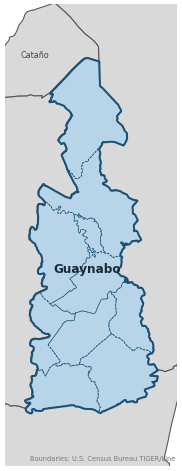
Guaynabo (2026)
Genealogy Toolkit
Diocesan Archive
Diocese: Archdiocese of San Juan
For sacramental records not available digitally, contact the diocesan archive directly.
Diocese WebsiteDigital Archives
- FamilySearch: Guaynabo Civil and parish records
- FamilySearch Catalog: San Pedro Mártir Parish Parish Records Primary ecclesiastical archive for Guaynabo. Baptisms start 1765; Marriages and Burials start 1771.
- Find A Grave: Guaynabo Municipality Cemetery Records Aggregated burial records for municipal and private cemeteries within Guaynabo, including the Cementerio Municipal de Guaynabo.
- Puerto Rico, Catholic Church Records, 1645–1969 Digitized Records Islandwide Catholic church-record collection including baptisms, marriages, burials, and confirmations. Includes Guaynabo parish records.
- Puerto Rico Civil Registration, 1885–2001 Digitized Records Civil registration births, marriages, and deaths for all Puerto Rico municipalities including Guaynabo, beginning 1885.
- FamilySearch: Puerto Rico Genealogy Complete records guide
Further Reading
- U.S. Census Bureau: Guaynabo Municipio Profile — U.S. Census Bureau Census Data Authoritative 2020 Census profile for Guaynabo, including official barrio list, population data, and geographic boundary information.
- Guaynabo Parish Record Indexes — Hijos de Coamo Index Detailed breakdown of baptismal books and image locations for San Pedro Mártir (1765–1943).
- Guaynabo: Notas para su Historia — Puerto Rico State Office of Historic Preservation (OECH) Book Official municipal history PDF providing demographic history from 1780 to 1860.
Found an error or have additional information? Contact us